

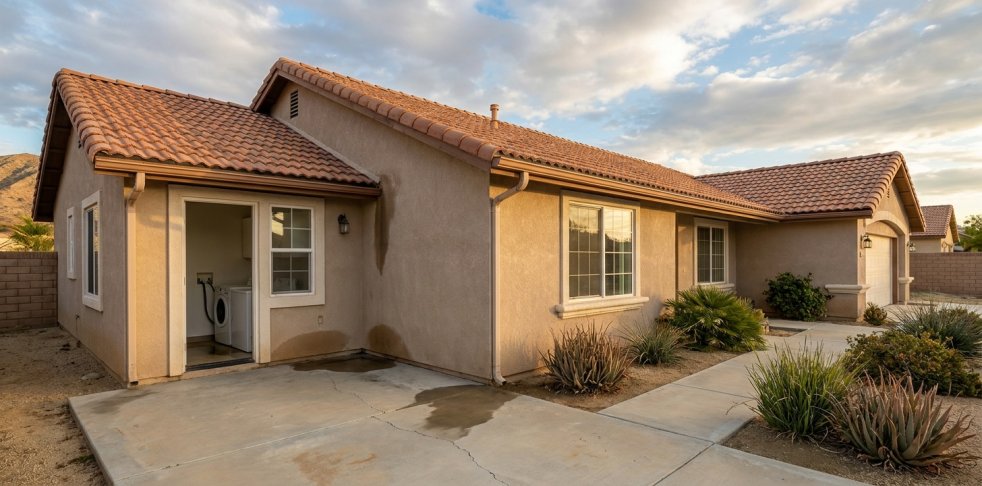
Top Causes of Water Damage in Southern California Homes
Southern California may be known for its dry climate, but homes in Beaumont and the Inland Empire are far from immune to water damage. Seasonal storms, aging infrastructure, and hard-working appliances all create real risk year-round. Knowing what to watch for can save you thousands in repairs.
Why Beaumont Homeowners Face Unique Water Damage Risks
Beaumont sits at a higher elevation than much of Southern California, which means cooler winters, occasional freeze-thaw cycles, and wind-driven rain that can catch homeowners off guard. The region also sits on expansive clay soils, which shift with moisture changes and put stress on pipes and foundations.
These local conditions make certain types of water damage more common here than in coastal or desert communities. Understanding them is the first step toward protecting your home.
Roof Leaks
Roof leaks are one of the leading causes of interior water damage in Southern California homes. During dry stretches, roofing materials crack and pull apart. When rain finally arrives, even a minor storm can push water through those gaps.
Warning signs to watch for:
-
Water stains on ceilings or upper walls
- Curling, missing, or cracked shingles
- Granules from asphalt shingles are collecting in gutters
- Sagging areas on the roofline
Even a small roof leak can saturate insulation and framing before you notice any visible damage inside. Annual roof inspections, especially before the rainy season, go a long way toward prevention.
Appliance Failures
Washing machines, dishwashers, water heaters, and refrigerators with ice makers are among the most common sources of sudden water damage in residential properties. Hoses degrade over time, connections loosen, and internal components fail without warning.
Warning signs to watch for:
- Puddles or moisture around appliance bases
- Rust or mineral buildup on supply lines
- The water heater is over 10 years old
- Slow or unusual drainage from washing machines or dishwashers
Replacing braided steel supply hoses every five years is a simple, low-cost step that prevents a lot of damage. Always turn off water supply lines when leaving home for extended periods.
Slab Leaks
Slab leaks occur when water or sewer lines running beneath the concrete foundation develop cracks or holes. In Beaumont, the combination of hard water mineral buildup and shifting clay soils accelerates pipe corrosion and stress fractures.
Warning signs to watch for:
- Unexplained spikes in your water bill
- Warm or wet spots on the floor
- The sound of running water when all fixtures are off
- Cracks appearing in walls or flooring
Slab leaks are especially destructive because moisture spreads slowly through the foundation and subfloor before surfacing. If you notice any of these signs, call a plumber immediately and have a restoration professional assess any structural moisture.
Other Common Causes Worth Knowing
- Clogged gutters and downspouts are directing water toward the foundation
- Window and door seal failures during wind-driven rain events
- HVAC condensate line clogs, causing overflow inside walls or ceilings
- Plumbing supply line failures under sinks and behind toilets
Water Damage Prevention Checklist for Beaumont Homeowners
Use this checklist seasonally to reduce your risk:
- Inspect your roof and flashing before and after the rainy season
- Clean gutters and verify downspouts direct water away from the foundation
- Check all appliance supply hoses for cracks, bulging, or mineral buildup
- Test your water heater pressure relief valve annually
- Monitor your water bill monthly for unexplained increases
- Inspect under-sink cabinets and around toilets for slow leaks
- Have your HVAC condensate drain line cleared each spring
- Know where your main water shutoff is located and confirm it works
What to Do If Water Damage Has Already Occurred
Speed matters more than most homeowners realize. Water migrates into walls, flooring, and structural materials within hours. Mold can begin developing within 24 to 48 hours in the right conditions.
Here is what to do right away:
- Shut off the water source if it is safe to do so
- Avoid walking through standing water near electrical panels or outlets
- Remove portable items and furniture from the affected area
- Do not use household fans as a substitute for professional drying equipment
- Document damage with photos before cleanup begins for insurance purposes
- Call a licensed restoration contractor as soon as possible
Consumer-grade fans and towels are not enough to dry out wall cavities, subfloors, or insulation. Professional equipment extracts moisture from materials that appear dry on the surface but are still saturated underneath.
Trust a Local Expert to Restore Your Home the Right Way
Team Delta has helped homeowners and businesses throughout Beaumont and the Inland Empire recover from water damage caused by all of the situations described above. Our team responds quickly, uses professional-grade drying and detection equipment, and works with your insurance to simplify the claims process.
Do not wait to see if the problem dries out on its own. The longer moisture sits, the more damage it causes, and the higher your restoration costs will be.
Call (951) 400-0830 to reach Team Delta and get a fast response from a team that knows Southern California homes inside and out.

-Logo.wine.svg)