

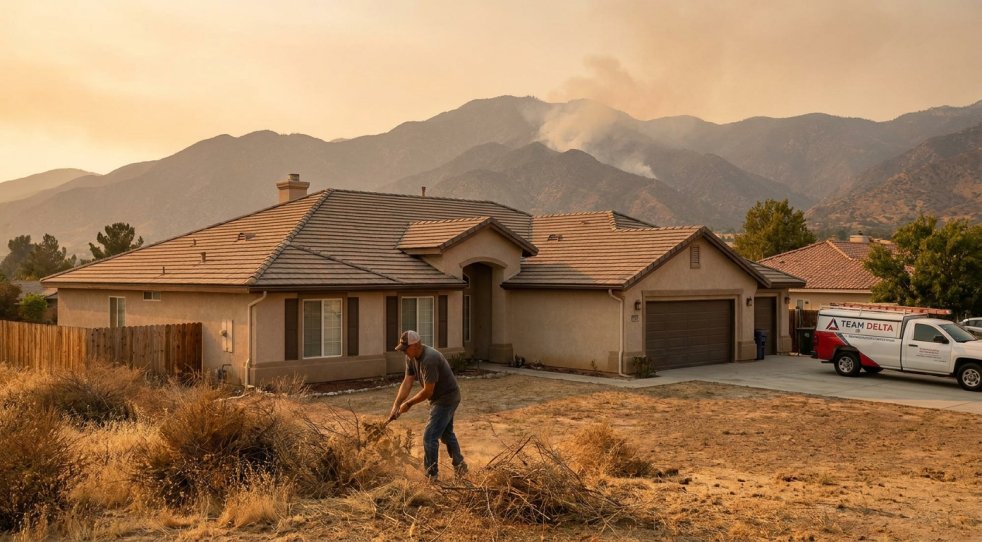
Fire Season Readiness: How to Protect Your Property Before Wildfires Hit
Beaumont sits in the San Gorgonio Pass, where hot, dry Santa Ana winds funnel through with force. Combine that with the surrounding wildland terrain and summer drought conditions, and you have one of the higher wildfire-risk corridors in Southern California. Fire season here is not a distant threat. It is a recurring reality.
The good news is that preparation makes a measurable difference. The steps you take now, before a fire approaches, can determine whether your property survives or suffers serious damage.
Why Beaumont Properties Face Elevated Wildfire Risk
The Inland Empire foothills and surrounding terrain create ideal conditions for fast-moving brush fires. Several factors put local properties at greater risk:
- Persistent low humidity and high winds during fire season (typically May through November)
- Proximity to wildland-urban interface zones in and around the San Bernardino National Forest
- Aging neighborhoods with mature landscaping and wood fencing close to structures
- Dry chaparral vegetation that ignites quickly and burns hot
Understanding your exposure is the first step toward reducing it.
Create Defensible Space Around Your Property
Defensible space is the buffer you create between your home and the vegetation that could carry a fire to your structure. California law requires at least 100 feet of clearance for most properties in high-risk zones, but the quality of that clearance matters just as much as the distance.
Here is how to approach it by zone:
- Zone 1 (0 to 30 feet): Remove dead plants, dry leaves, and wood debris. Keep grass mowed short and irrigated. Space out shrubs and trees so fire cannot travel easily between them.
- Zone 2 (30 to 100 feet): Reduce plant density. Cut back branches that overhang your roof or touch your fence. Remove ladder fuels, which are low branches that allow ground fire to climb into tree canopies.
- Roof and gutters: Clear out accumulated leaves and debris regularly. Embers land on roofs and in gutters, and that is often how homes ignite.
Harden Your Home Against Embers and Radiant Heat
Most homes do not ignite from direct flame contact. They catch fire from embers landing on vulnerable surfaces or from radiant heat exposure. Addressing these entry points is one of the highest-impact things you can do.
- Install ember-resistant vents on attic and crawl space openings
- Replace wood shake roofing with Class A fire-rated materials if possible
- Seal gaps around windows, doors, and eaves where embers can enter
- Move wood piles, propane tanks, and patio furniture away from the house during high-risk periods
- Consider dual-pane or tempered glass windows, which hold up better against radiant heat
Even small upgrades add up. Each vulnerability you close reduces the chance that a passing ember event becomes a structural fire.
Minimize Smoke and Heat Damage Inside Your Property
Even when a fire does not reach your structure directly, smoke infiltration can cause serious damage to interiors, HVAC systems, and personal belongings. Heat from a nearby fire can warp siding, crack windows, and damage materials without ever producing an open flame on your property.
Before fire season peaks, take these steps:
- Seal gaps around doors and windows with weatherstripping to slow smoke infiltration
- Replace HVAC filters before fire season and keep the system on recirculation mode during smoke events
- Store important documents and irreplaceable items in a fireproof safe or off-site location
- Keep exterior surfaces clean and free of dust and debris that can absorb smoke odor
Prepare an Emergency Plan Before You Need One
Evacuation orders in Riverside County can move quickly. Having a plan in place means you spend less time making decisions under pressure and more time getting out safely.
- Know your evacuation routes and have at least two options mapped out
- Sign up for Riverside County emergency alerts at rivcoready.org
- Keep a go-bag packed with medications, documents, and essentials
- Photograph your property and contents for insurance documentation purposes
- Notify your insurance carrier of any recent improvements that affect your coverage
What to Do After a Wildfire Affects Your Property
Even properties that survive a wildfire often face significant damage from smoke, soot, heat exposure, and water used during firefighting efforts. These issues require professional assessment and restoration, not just a surface cleaning.
Smoke residue is acidic and continues to damage materials long after the fire is out. Soot that settles into walls, ductwork, and flooring can cause lasting odor and health concerns if not properly removed. Structural components exposed to intense heat may be compromised even when they appear intact.
This is where Team Delta comes in. Our team is trained to assess fire and smoke damage thoroughly, document losses for insurance purposes, and restore properties to safe, livable condition. We serve Beaumont and the surrounding Inland Empire communities and understand the specific challenges that wildfire events create in this region.
Do Not Wait Until Fire Season Is Already Here
The time to prepare is before a fire is anywhere near your neighborhood. Defensible space takes time to establish. Repairs and upgrades require scheduling. And once an evacuation warning is issued, your window for action closes fast.
If your property has already been affected by fire or smoke damage, or if you want a professional assessment of your restoration readiness, contact Team Delta today. Call (951) 400-0830 to speak with our team and get the help you need before or after disaster strikes.

-Logo.wine.svg)