

April Showers & Hidden Damage: How Spring Weather Can Impact Your Beaumont Home
Spring in Beaumont, CA, brings something most residents welcome: rain. After dry winters, those April showers feel like relief. But for your home or business, that seasonal moisture can quietly cause serious damage long before you notice anything wrong.
The Inland Empire sits in a unique climate zone. Beaumont gets enough spring rainfall to saturate soil, stress roofing systems, and push water into places it was never meant to go. The problem is not always what you can see. It is what is hiding behind your walls, under your floors, and in your crawl spaces.
Why Spring Weather Is Riskier Than You Think
Most homeowners associate water damage with major storms or burst pipes. But spring damage often builds slowly, through repeated light rain events that expose small vulnerabilities in your home's exterior.
Beaumont's elevation and semi-arid soil conditions make drainage unpredictable. When the ground becomes saturated after a stretch of rainy days, water has nowhere to go except toward your foundation, through your roof, or along your exterior walls.
- Soil expansion from moisture shifts foundation slabs and footings
- Clogged gutters overflow and direct water toward your home's base
- Aging roof materials crack under temperature swings between warm days and cool nights
- Window and door seals degrade over winter and let water seep in during spring rains
Warning Signs You Should Not Ignore
Hidden water damage rarely announces itself. By the time you see visible signs, the damage has usually been building for days or weeks. Here is what to watch for after any significant spring rainfall.
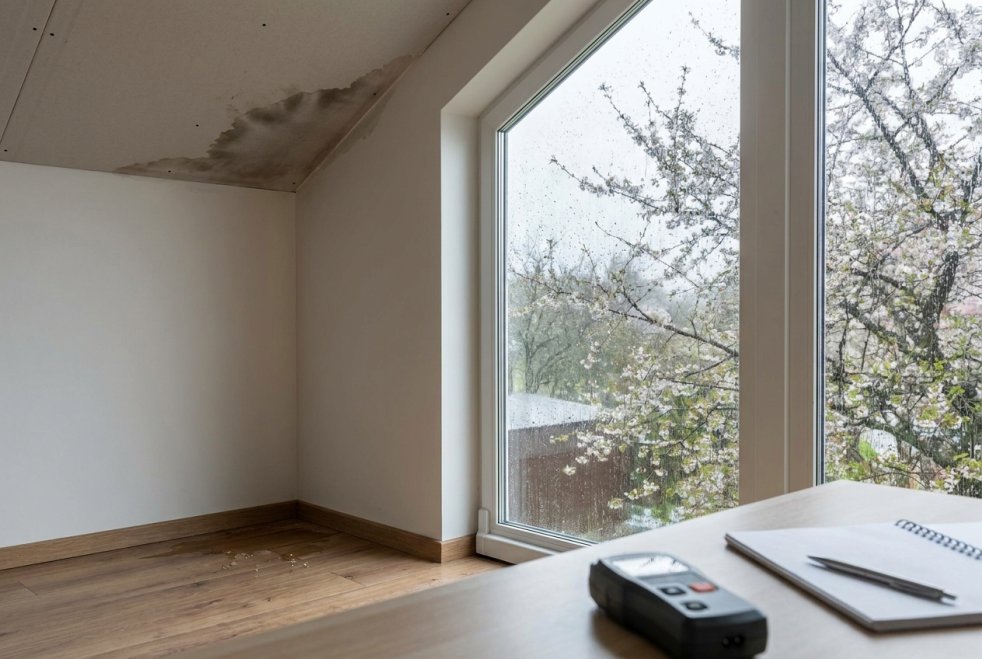
- Water stains on ceilings or walls, even faint discoloration
- A musty or earthy smell inside rooms that are normally odor-free
- Soft spots or buckling in flooring, especially near exterior walls
- Doors or windows that suddenly stick or do not close properly
- Cracks in drywall near corners or along ceiling lines
- Standing water or damp soil pooling near your foundation after rain
Any one of these signs is worth investigating. Two or more together usually means moisture has already found a way inside.
The Hidden Damage That Costs the Most
Surface water you can see and dry out yourself is the easy part. The damage that leads to the biggest repair bills is the kind that stays hidden for weeks.
Mold is the most common and costly consequence of unresolved spring moisture. In Beaumont's climate, where temperatures warm up quickly in spring, mold can begin developing inside wall cavities within 24 to 48 hours of water intrusion. Once it spreads into insulation, framing, or subfloor materials, remediation becomes a much larger project.
Foundation damage is another serious risk. Repeated soil saturation and drying cycles put stress on concrete slabs and block foundations. Small cracks widen over time, and water that enters through foundation gaps can compromise structural integrity and lead to persistent indoor moisture problems.
What to Do After a Spring Rain Event
You do not have to wait for a disaster to take action. A few simple steps after heavy rain can catch problems early and save you significant money.
- Walk the perimeter of your home and look for pooling water near the foundation
- Check your gutters and downspouts for blockages or overflow staining on exterior walls
- Go into your attic and look for wet insulation, staining, or daylight through the roof deck
- Inspect under sinks, around water heaters, and in any crawl space for moisture or odor
- Look at your ceiling in every room, including closets and hallways
If you find anything concerning, do not wait to see if it dries on its own. Moisture that is not fully extracted and dried with professional equipment almost always leads to mold or structural damage.
When to Call a Restoration Professional
Some situations go beyond what a homeowner can handle with fans and towels. You should call a professional restoration contractor if you find any of the following.
- Water has entered through the roof, foundation, or walls
- You smell mold or mildew, but cannot locate the source
- Flooring, drywall, or insulation has been exposed to moisture
- You had a previous water event and are now seeing new staining or odor
Professionals use moisture meters and thermal imaging to find water that has migrated behind surfaces. That step alone can be the difference between a targeted repair and a full gut-and-rebuild.
Protect Your Home Before the Next Storm
Spring is also the right time to address vulnerabilities before they become emergencies. Have your roof inspected for cracked or missing shingles. Clean your gutters and extend downspouts away from your foundation. Make sure your grading slopes away from the structure on all sides.
These are small investments that prevent large claims. And if you have already noticed signs of moisture intrusion this season, the sooner you act, the less it will cost to fix.
Team Delta serves homeowners and businesses throughout Beaumont and the surrounding Inland Empire communities. Our team responds quickly, uses professional-grade drying equipment, and handles everything from initial inspection through full restoration.
If spring rain has left you with questions or concerns about your property, call us at (951) 400-0830. We are here to help you catch hidden damage before it becomes a major problem.

-Logo.wine.svg)